
Demand appears.
Explicit, local or discovery-led.
The main entry point for Mazzaneh Phase 1—connecting buyer intent, small-business response, product discovery, participation and intelligence in one practical MVP ecosystem.
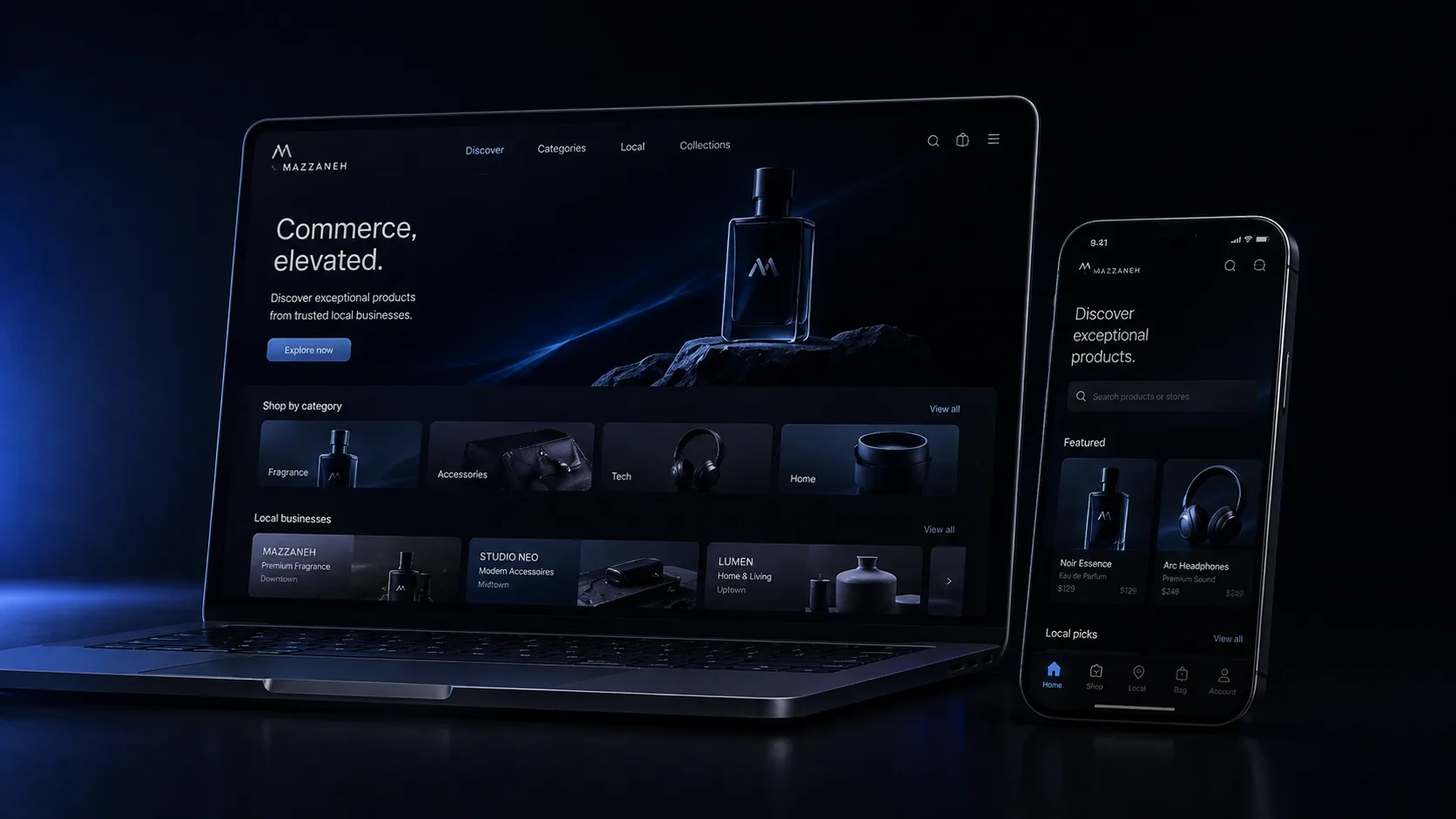
For buyers, Mazzaneh made intent visible—whether explicit, local or discovery-led.
For businesses, it created a path to respond before full digitization became a requirement.
Presence, relevant demand and direct response gave smaller sellers a practical first step.
Explore Business ↗
Connected interaction data helped turn market activity into operational understanding—without making surveillance the model.
Explore Modules ↗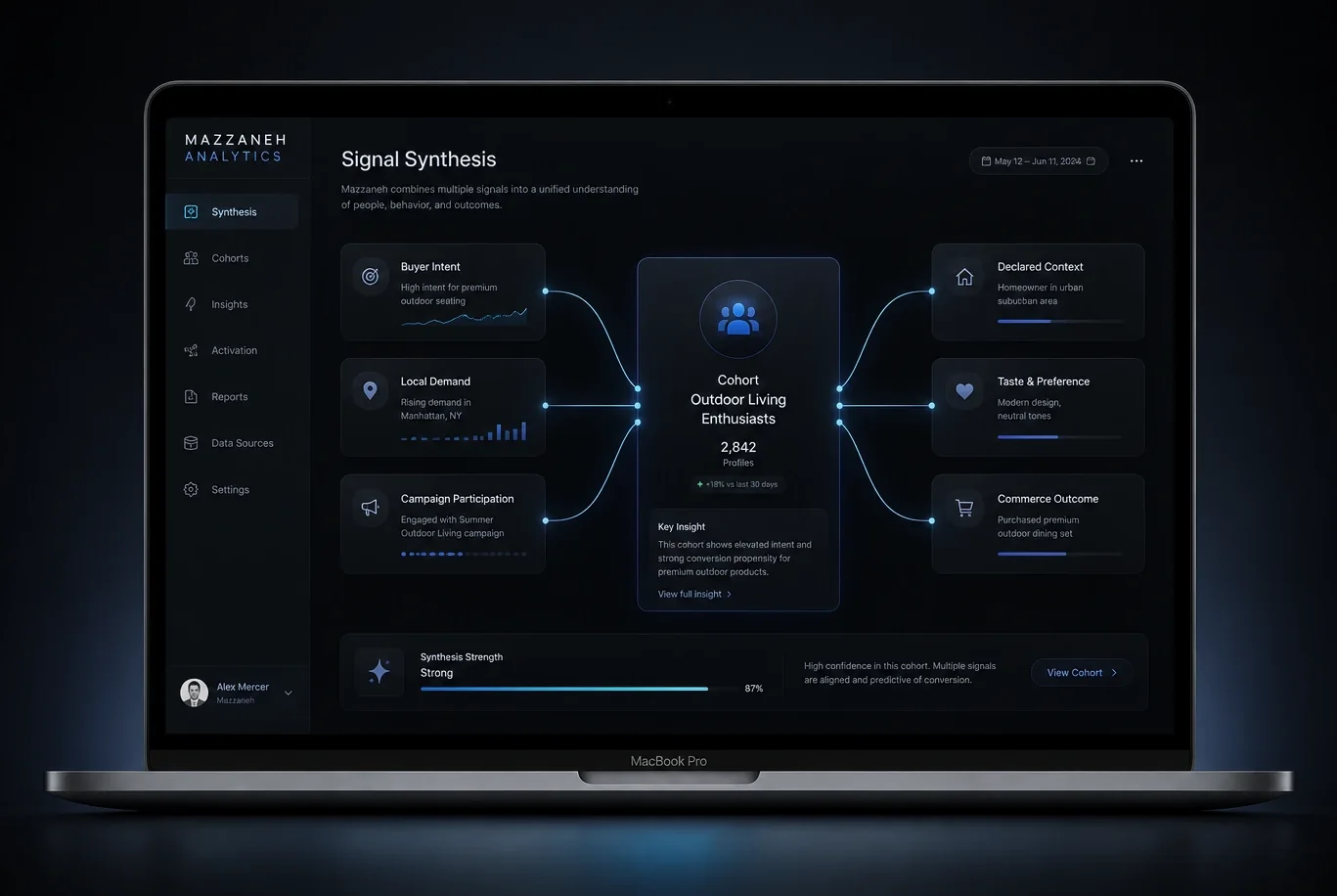
A compact view of how Mazzaneh connected market need to business action and useful learning.
Explicit, local or discovery-led.
Presence, quote, content or route.
Relationship, attention or purchase.
Operational and analytics context.
Exact availability and maturity varied by product version, location and operating period.
Seven focused stops keep market context, product mechanics, public evidence and external signals separate and easy to review.
The market conditions and operating constraints that shaped the system.
Open chapter ↗How intent moves through business response, interaction and learning.
Open chapter ↗A low-friction path for sellers to become present, useful and reachable.
Open chapter ↗The practical routes used by individuals and businesses to sell.
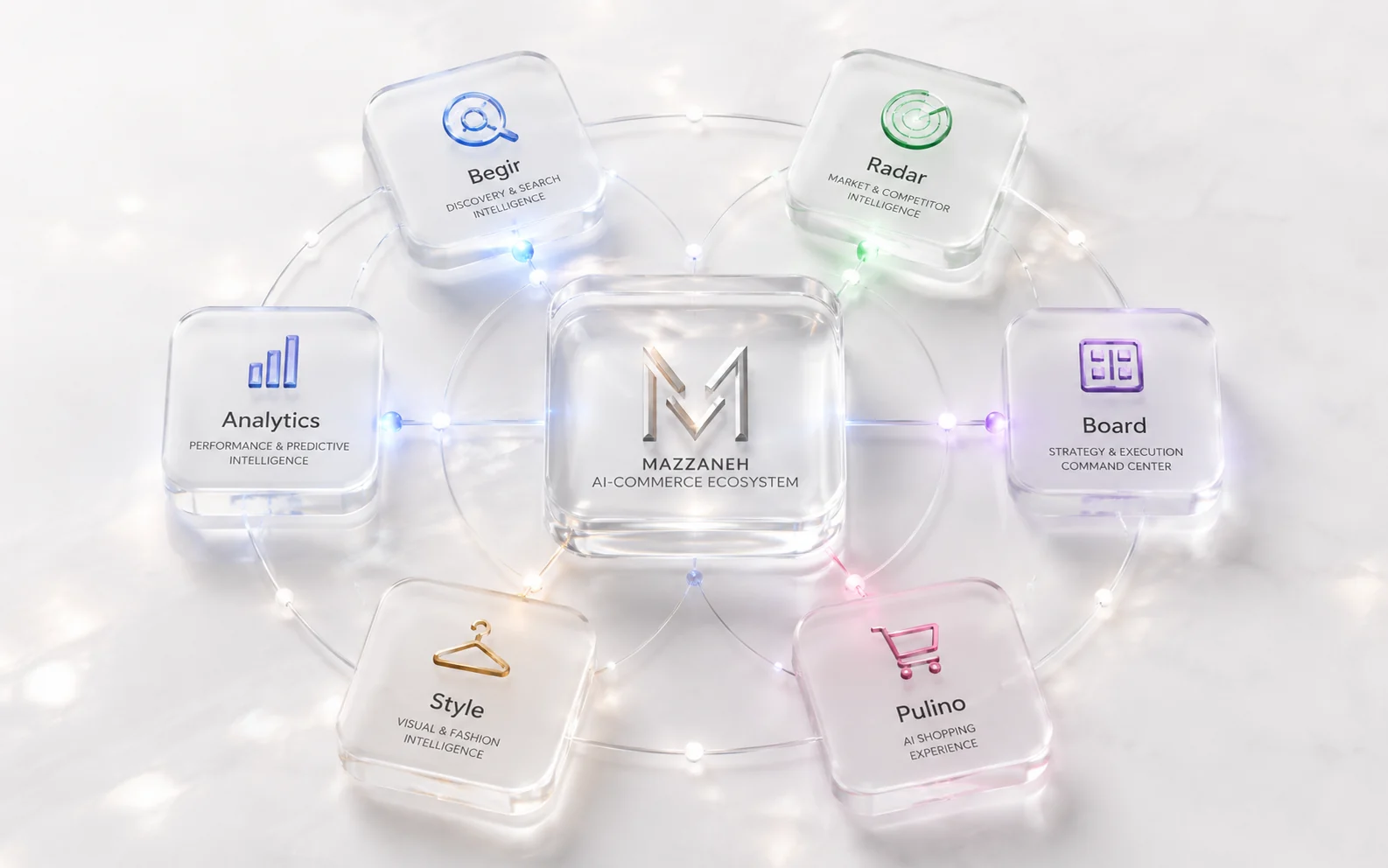
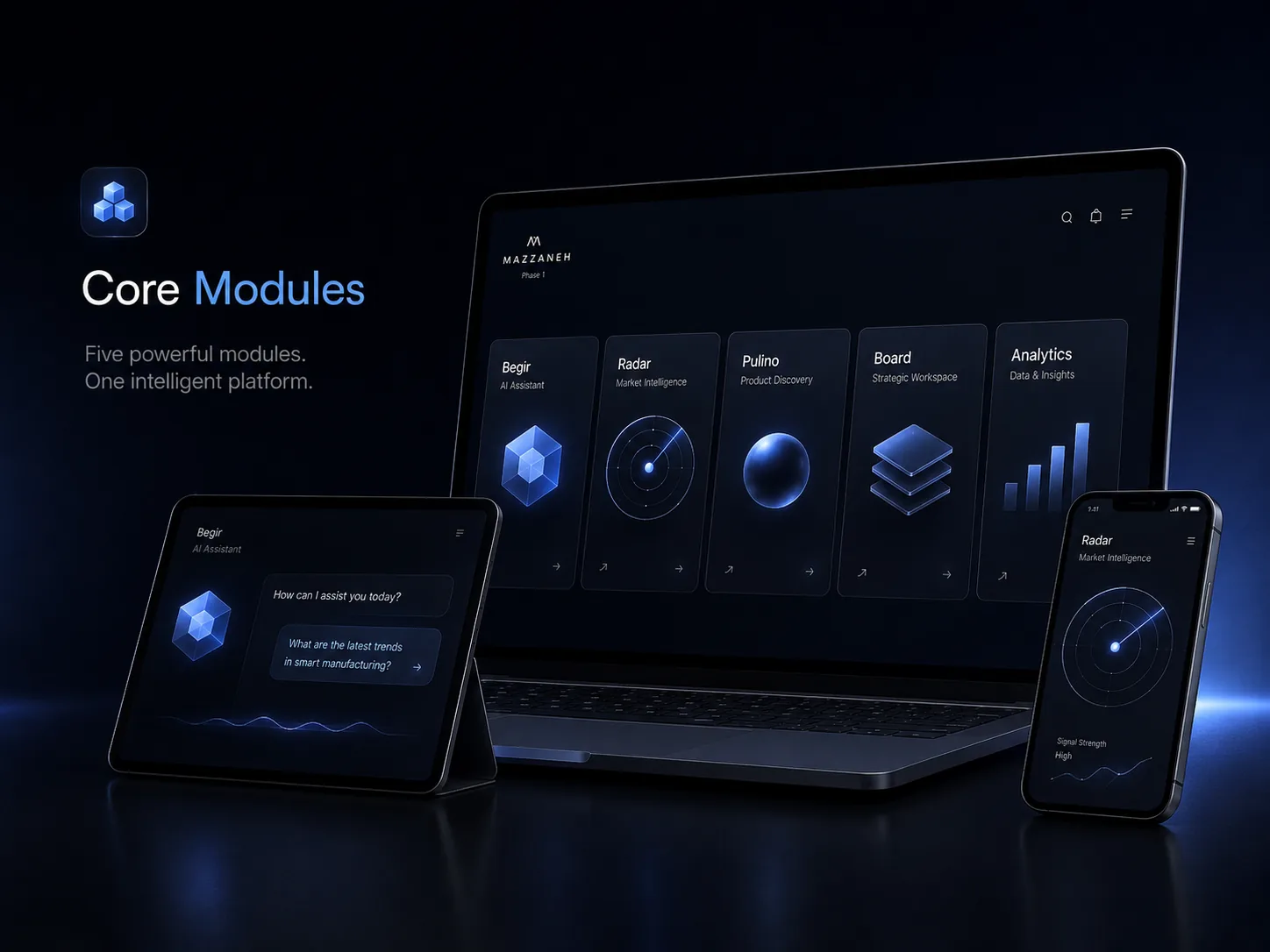
Open chapter ↗Begir, Radar, Pulino, Board, Analytics and connected product surfaces.
Open chapter ↗Public analytics, campaign records, measurement boundaries, source families and controlled verification routes for the bounded Shiraz MVP.
Open evidence index ↗International startup-program selection, event preparation, follow-up and the next event cycle.
Open record ↗Choose the lens that matches what you need to understand. The featured panel changes with the category, while every destination stays directly accessible.
Start here when a reviewer needs the product map, historical operating record, causal origin and connected system architecture before judging individual mechanisms.
See how a seller becomes present, receives demand, builds relationships, operates the system and connects those surfaces to selling and the Phase 1 monetization model.
Inspect the distinct mechanisms that capture explicit demand, local need, user context, qualified attention and cross-module learning without collapsing them into one generic feature set.
Use this lens when the question is not what Mazzaneh intended to do, but how module ownership, public claims, controlled evidence and release quality are bounded for review.
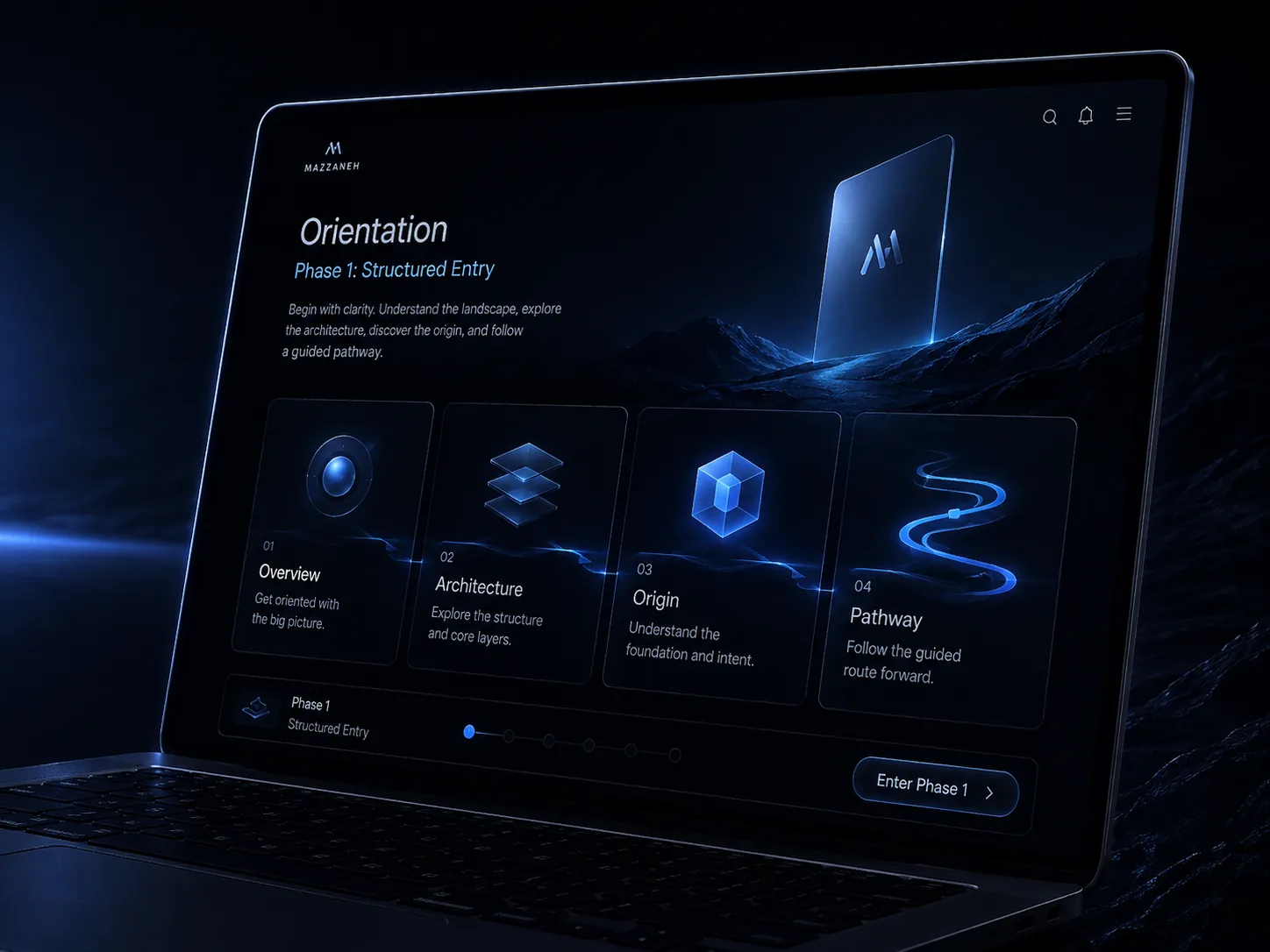


Choose a Phase 1 lens
20 direct destinations across Phase 1. The landing page is the entry point; supporting source packages remain embedded assets rather than competing public routes.
Phase 1 describes the original Mazzaneh company and MVP operation in Iran. It remains distinct from later solo-execution work.
The original product and operating work belongs to the company/MVP period.
The system met real demand, sellers and infrastructure—not a laboratory scenario.
Geography, modules and versions varied; the rollout was not universal.
Public clarity comes first. Sensitive source material stays controlled.
Analytics, traffic, operating, transaction and banking records exist. Sensitive source material is shared only in a serious secondary conversation, with appropriate controls.
The public Evidence Index connects the bounded Shiraz MVP to selected Google Analytics records, launch and advertising archives, commercial measurement boundaries, operating-context evidence, source families and the path to qualified or controlled diligence.