
01 · INFRASTRUCTURE
GPU Monitoring & Response
Telemetry, anomaly detection, graduated response and forensic concepts connect ZOE to GPU Sentinel. Performance and readiness remain benchmark questions, not ZOE-level assumptions.
Open GPU Sentinel →A public architecture map for AI infrastructure security, system controls, governance, output safety and adjacent optimization layers. ZOE coordinates technical surfaces; it is not a claim that every mapped element is one finished product.

ZOE connects GPU monitoring, LLM architecture, security research, defensive control families, governance, auditability and system-efficiency ideas. Each constituent layer keeps its own maturity, disclosure and proof path rather than inheriting one blanket status from the umbrella.
ZOE's mapped architecture belongs to the Phase 2 asset-formation corpus. Historical Phase 1 Mazzaneh product evidence remains separate. Independent security benchmarking, legal/IP review, compliance analysis, partner integration and production validation belong to Phase 3.
Telemetry, anomaly detection, graduated response and forensic concepts connect ZOE to GPU Sentinel. Performance and readiness remain benchmark questions, not ZOE-level assumptions.
Open GPU Sentinel →LLM Anatomy and the optimization backbones provide the reference and routing layer beneath ZOE's security/control view.
Open LLM Anatomy →ISBP occupies the Security Research / Threat Discovery branch, with a confidential mitigation architecture. Defensive controls and protocol candidates are separate ZOE surfaces; sensitive mechanics remain outside the public layer.
Open ISBP →Logging, traceability, privileged-command validation, containment logic and reviewable decision boundaries form a governance surface rather than a certification claim.
A safety architecture that treats model egress/output constraints as a first-class control surface, rather than relying only on detecting every possible malicious input.
See the control logic ↓Routing, caching and compute discipline interact with security and observability. Performance and savings claims remain workload-level benchmark questions.
Open Optimization →
ZOE does not duplicate GPU benchmarks. It routes infrastructure monitoring and response questions to the dedicated GPU page.
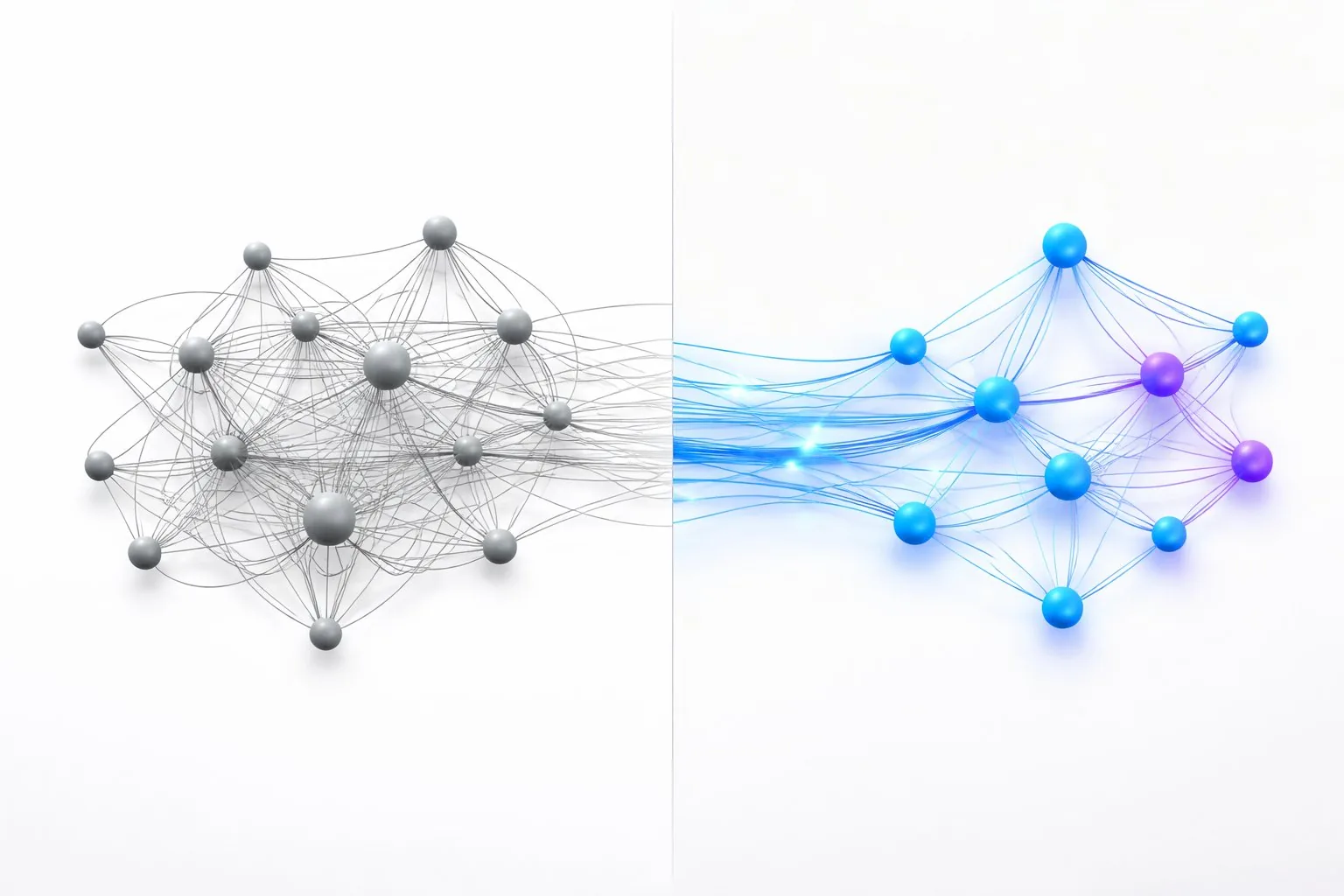
The 21-slot Anatomy and optimization candidates provide the model-architecture reference beneath ZOE.

Efficiency is treated as a system design objective. Percentage savings and planet-scale economic claims are not canonical performance results.

The useful architectural idea in the legacy ZOE corpus is that safety should not depend only on recognizing every possible hostile or malformed prompt. Output constraints, egress checks, refusal behavior and policy-aware response validation can create an additional bounded control surface.
Older ZOE/IP materials use several large inventory numbers. They are useful provenance leads, but definitions, deduplication and category boundaries must be reconciled before those numbers become public proof points.
The following numbers remain in the internal source map because they recur in legacy materials. ZOE does not use them as hero metrics or as evidence of production completeness.
The umbrella is useful only if reviewers can move from the overview to the correct source layer. HUAI remains later because it integrates across an even broader capability map.